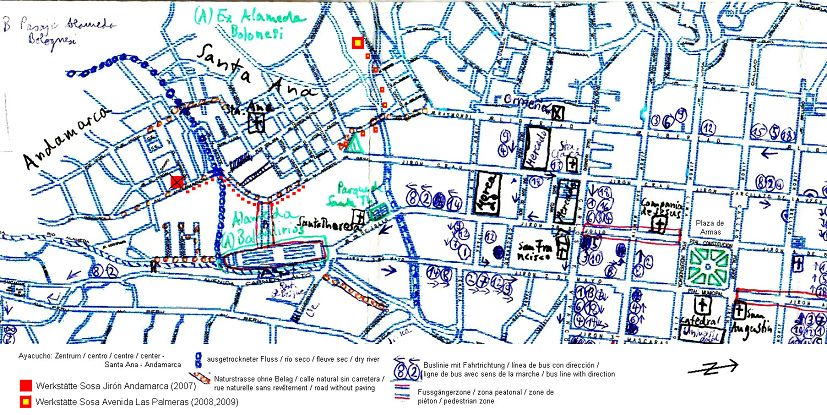
From the historic center toward Andamarca
A route map places the workshop in relation to Ayacucho’s Plaza de Armas and the surrounding neighborhoods.
A redesigned photo essay on weaving, embroidery, wool preparation and natural dyeing in an Ayacucho craft workshop connected with the community of Milpo.
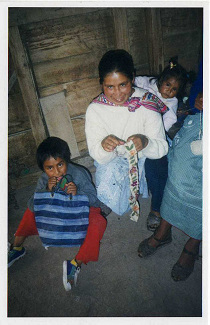
The workshop brings together weaving, embroidery and wool work. The craft practice is rooted in Ayacucho’s textile traditions and in the migration between rural highland communities and the city. The photographic material follows the route to the workshop, the people at work, and the preparation of wool and dyes.
The older route into the Andamarca area shows the geography of everyday urban life in Ayacucho: steep lanes, unfinished roads, bridges over dry riverbeds and modest houses built around practical needs rather than comfort. This part of the page can work as a documentary introduction before the visitor enters the workshop itself.
A route map places the workshop in relation to Ayacucho’s Plaza de Armas and the surrounding neighborhoods.
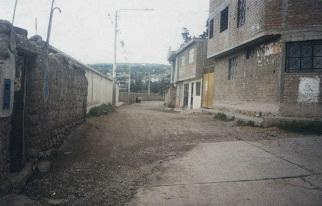
Parts of the route pass through streets without paving, where vehicles move slowly and daily life is shaped by dust, rain tracks and uneven ground.
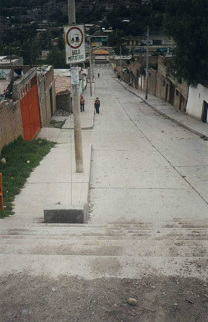
Some lanes climb sharply and are usable mainly by pedestrians or small moto-taxis. These details give the workshop setting a strong sense of place.
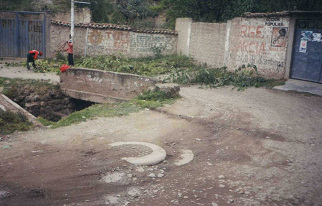
The bridge marks the transition toward the workshop area and the quieter streets beyond the central part of the city.
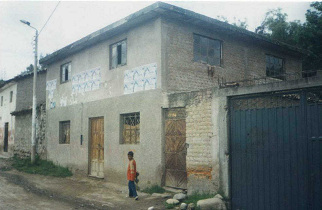
The former workshop space was located in a simple urban house. The building itself tells part of the economic story behind the craft.
The workshop is both a production space and a social space. People weave, stitch, prepare materials, talk, care for children and show finished pieces. The photographs are strongest when presented as a human craft story rather than as a raw inventory.

Loom work requires patience, precision and equipment that represents a serious investment for a small workshop.
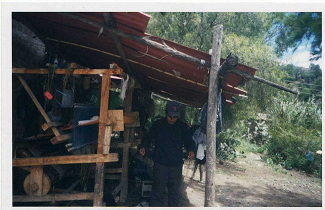
Some weaving can be done outside, using available light and open space when the weather allows it.

The workshop functions as a shared working environment, with adults and children often present in the same space.

Fine stitched bands show the decorative side of the workshop’s production and the steady handwork behind each piece.
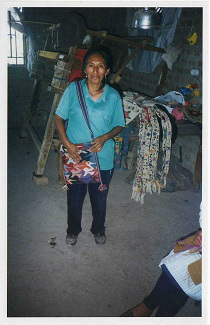
Bird designs appear as symbolic decorative motifs. Present them as craft motifs unless you can verify a specific cultural interpretation.

The tapestry format highlights the workshop’s ability to move beyond practical items into more decorative textile pieces.
The final part follows wool as a material: stored in different colors, rewound for use, heated in dye baths and dried after coloring. This process gives the visitor a clearer sense of how finished textile pieces begin.
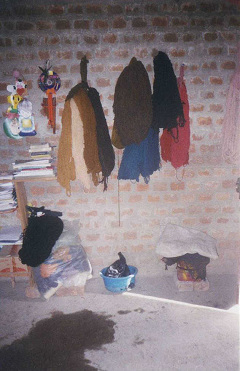
Colored wool hangs ready for later work, showing the palette before it enters the loom or embroidery process.
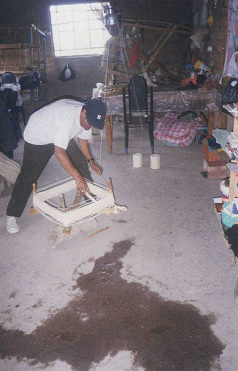
The rewinding process prepares the thread for more controlled use in weaving and related textile work.
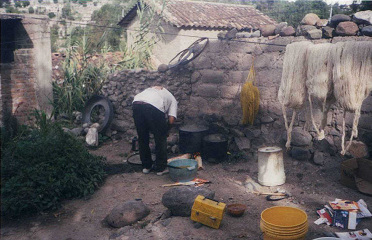
Wool is dyed in heated water over an open flame. This part of the process links craft production to older, low-tech methods.
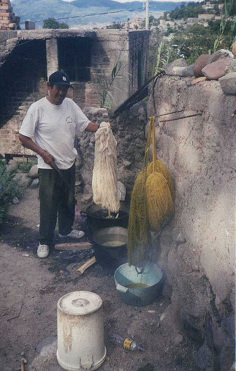
The transformation from raw white wool to colored thread begins in the dye bath, before rinsing and drying.
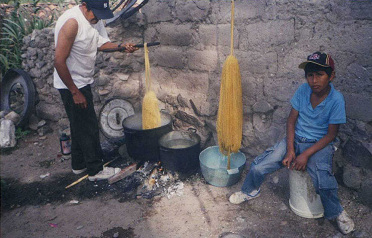
After heating, the colored wool is lifted from the kettle and prepared for drying.
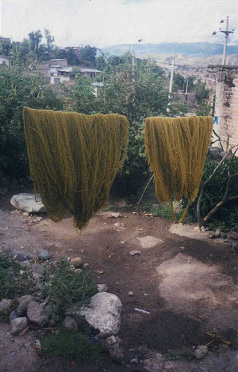
Freshly dyed wool is hung up to dry before it can be used in finished woven or embroidered pieces.